
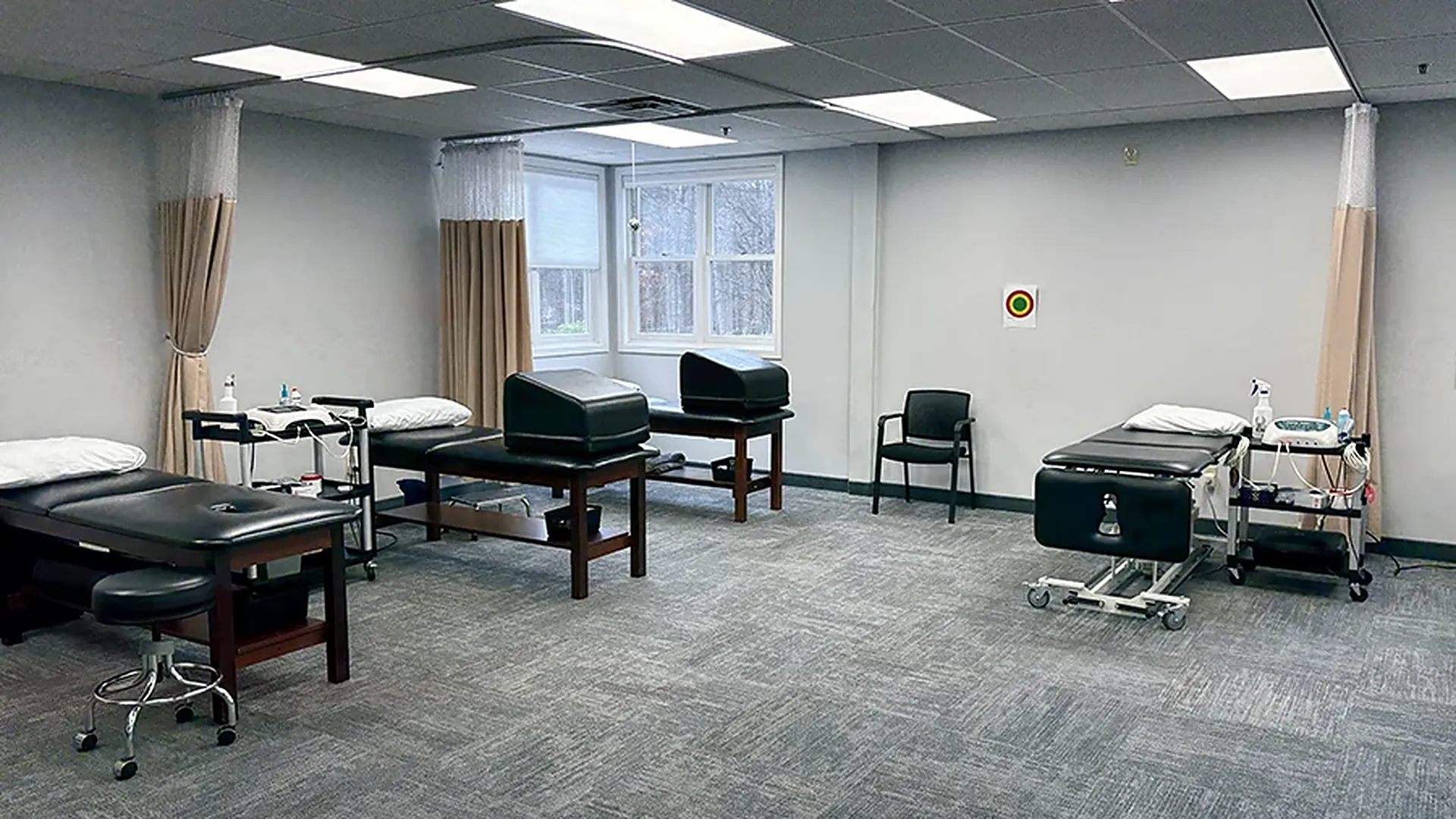
All too often we over complicate things unnecessarily.
That is our owner, Dan Carroll, PT, FAAOMPT, on how physical therapy usually gets explained. His position is not complicated: “My goal is to make patients’ concerns less complex and empower them to take an active approach to getting better.” Patient education is not a handout at discharge. It is the first thing we treat you with.
PT should be simple. Move what is stiff. Strengthen what is weak. Stabilize what is less controlled. Explained from that view, your problem stops being a mystery: you know which of the three you are working on, why a given exercise is on your list, and what to do when something flares up on a Saturday.
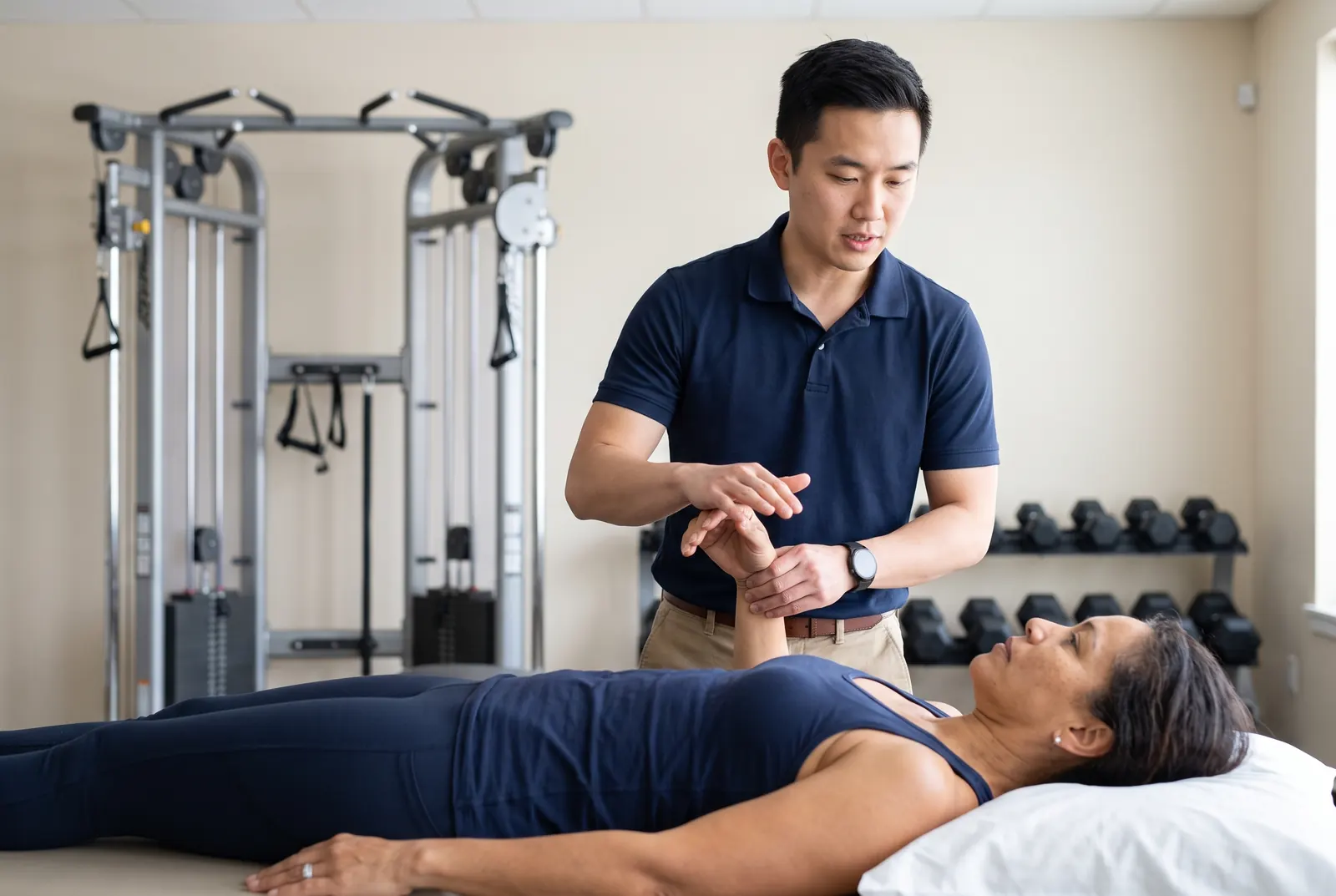
You talk, we explain, then you own your part.
You Talk First
Your visit starts with your story in full, before anyone hands you a program. What you have stopped doing matters as much as what hurts, because that is what we are aiming to give back.
The Explanation
After the exam you get the findings in plain words: what is stiff, what is weak, what your body is not controlling, and which of those is driving your pain. If a clinical term is worth knowing, we explain it. If it is not, we do not use it.
Your Part of the Plan
Then we go through what you are responsible for and why each piece is there. In Dan Carroll’s words: “If I follow this approach and explain a patient’s concerns from this view point, it empowers patients so that they can actively participate in the process of getting better.”
What our patients say.
"Carroll PT is a clean, friendly and professional facility. They are very responsive to my questions and concerns. I enjoy the home exercise program/app customized to my needs."Darlene G. · Questions and Concerns Answered
Schedule Your Appointment
No referral needed. Most insurances accepted. Doors open at 5:00 AM.
Your first visit is a full one-on-one evaluation: come in, tell us everything, and leave with a plan.
* Required field
You’re all set.
We’ll reach out within one business day to confirm your appointment. If you need to speak with us sooner, call us directly.