
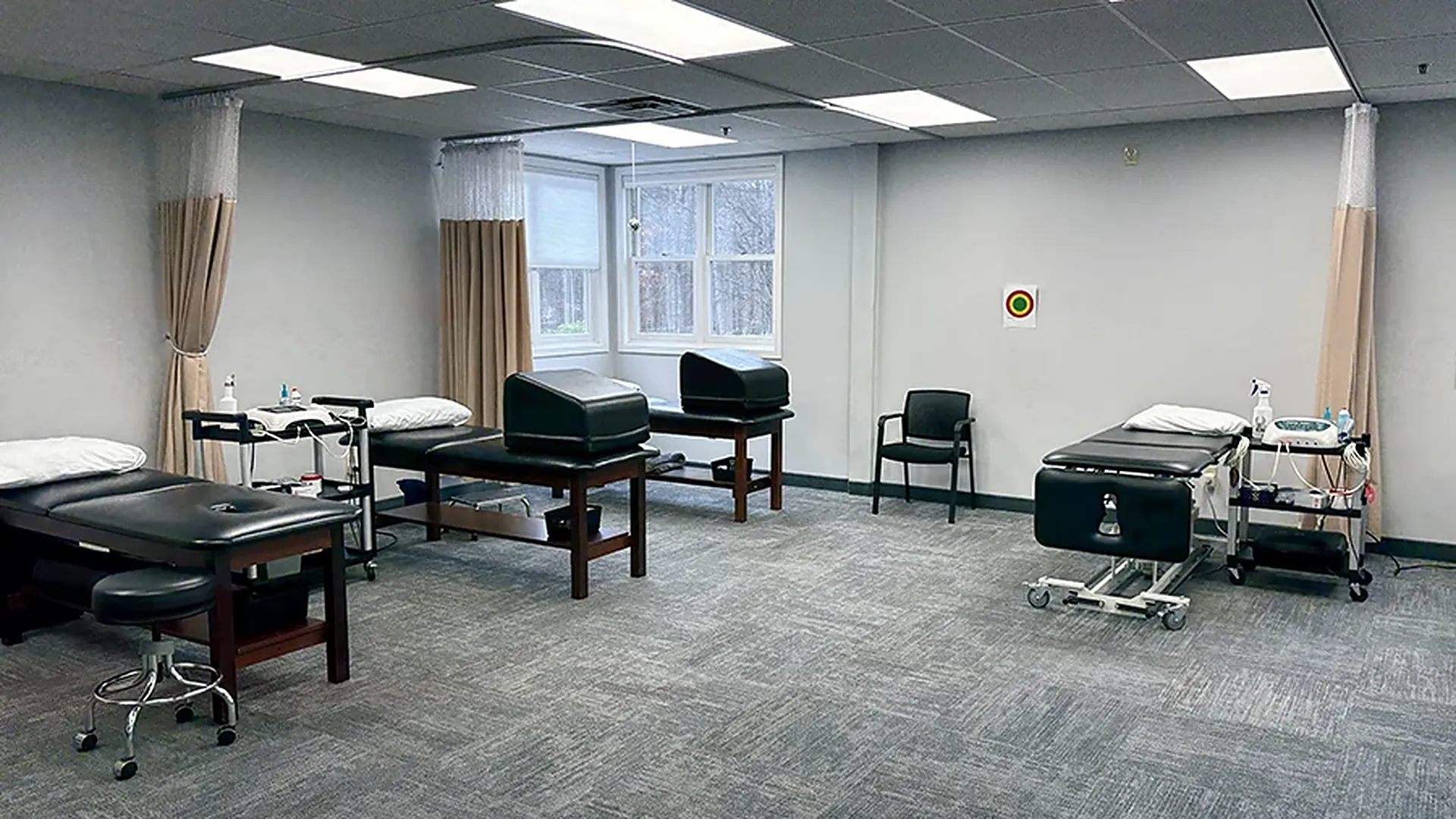
Your back did not just "give out."
The bending-over moment is rarely the cause. It is the last thing added to a load that has been accumulating: a hip that stopped extending, a mid-back that stopped rotating, a habit of lifting with the spine because the legs were not invited. Then one ordinary movement crosses the line and it feels like a sudden event.
Sciatica is the same story with a nerve involved. A disc is a tough ring with a gel centre. When the gel leaks through the protective rings, it presses on a nerve root, causing irritation and pain that travels down the leg rather than staying in the back. Where the pain goes, and what makes it better or worse, tells us which level and which structure is doing it.
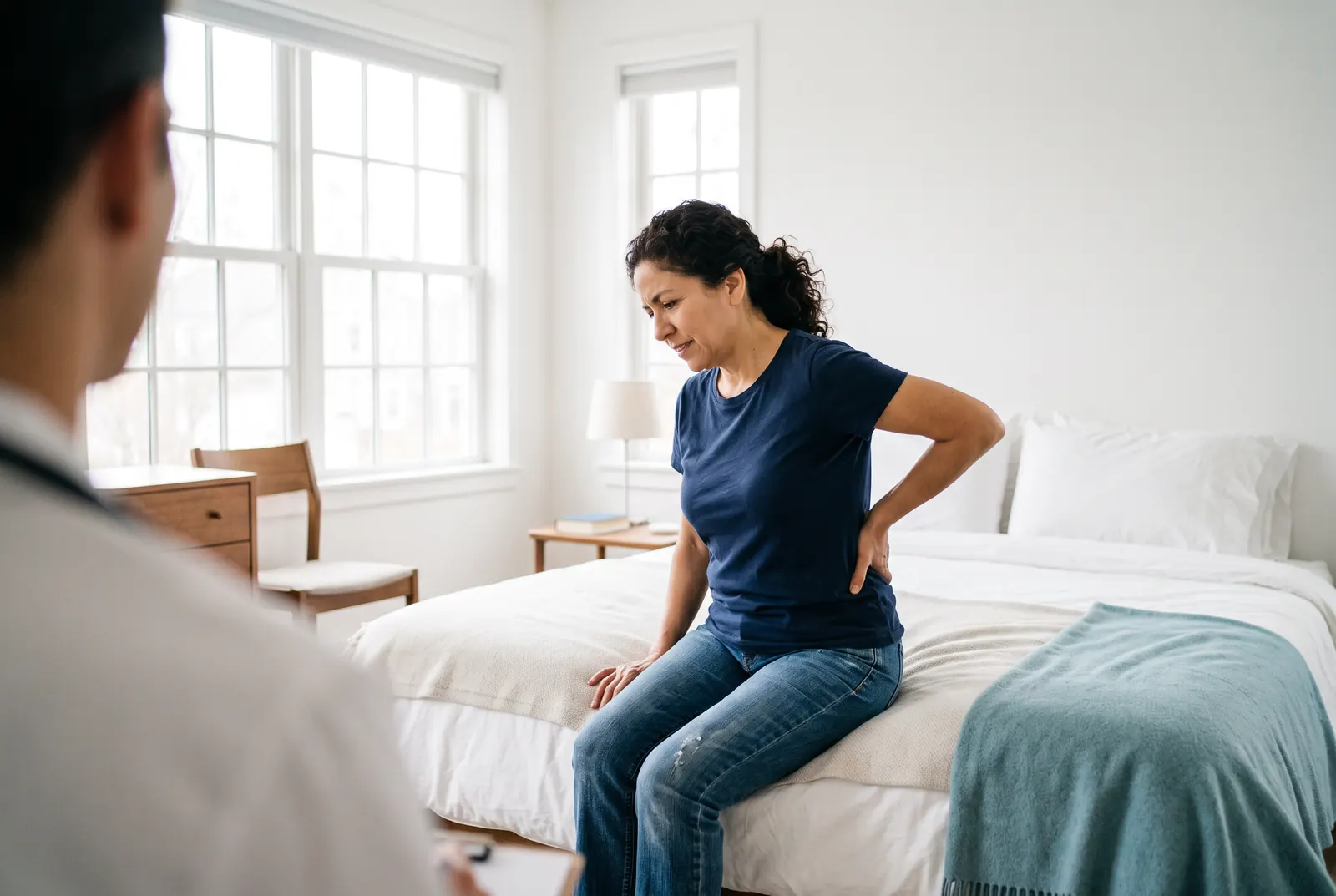
Where it goes matters as much as where it started.
Pain that stays in the back and pain that runs down the leg point at different structures. So does pain that eases when you walk versus pain that eases when you sit. These details decide the plan.
Lower Back Pain
Dull ache or sharp pain in the lumbar spine, often worse with prolonged sitting or standing.
Morning Stiffness
Difficulty moving when you first wake up that gradually loosens over the first half hour of the day.
Sciatica Down the Leg
Shooting pain, numbness, or tingling that runs from the back through the buttock and down the leg, sometimes as far as the foot.
Muscle Spasm
Involuntary muscle contractions that produce intense, localized pain and visible tightening.
Reduced Bending
Difficulty touching your toes, putting on shoes, or performing forward bending tasks.
Pain After Sitting
Back pain that intensifies after extended periods of sitting, then requires time to settle after standing.
We find the source, not just the symptom.
Treatment starts with watching how you bend, hinge, rotate, and load the spine, and with finding out which positions relieve the leg pain and which provoke it. That mechanical picture tells us more about what to do on Monday morning than an image of a disc does, because a great many pain-free people have imperfect discs.
From there it is the same three moves: move the segment or the hip that is stiff, strengthen the trunk and glutes that have gone quiet, and stabilize the level that is taking more travel than it should. Hands-on work and spinal manipulation open the door. The exercise is what keeps it open after you leave.
No referral needed. Most insurances accepted. Doors open at 5:00 AM, so you can be seen before work.
What our patients say.
"I have been attending physical therapy at Carroll Physical Therapy and have had an excellent experience. I initially worked with Luke, who was outstanding."Marjorie H. · Google Review
Schedule Your Appointment
No referral needed. Most insurances accepted. Doors open at 5:00 AM.
Your first visit is a full one-on-one evaluation: come in, tell us everything, and leave with a plan.
* Required field
You’re all set.
We’ll reach out within one business day to confirm your appointment. If you need to speak with us sooner, call us directly.