
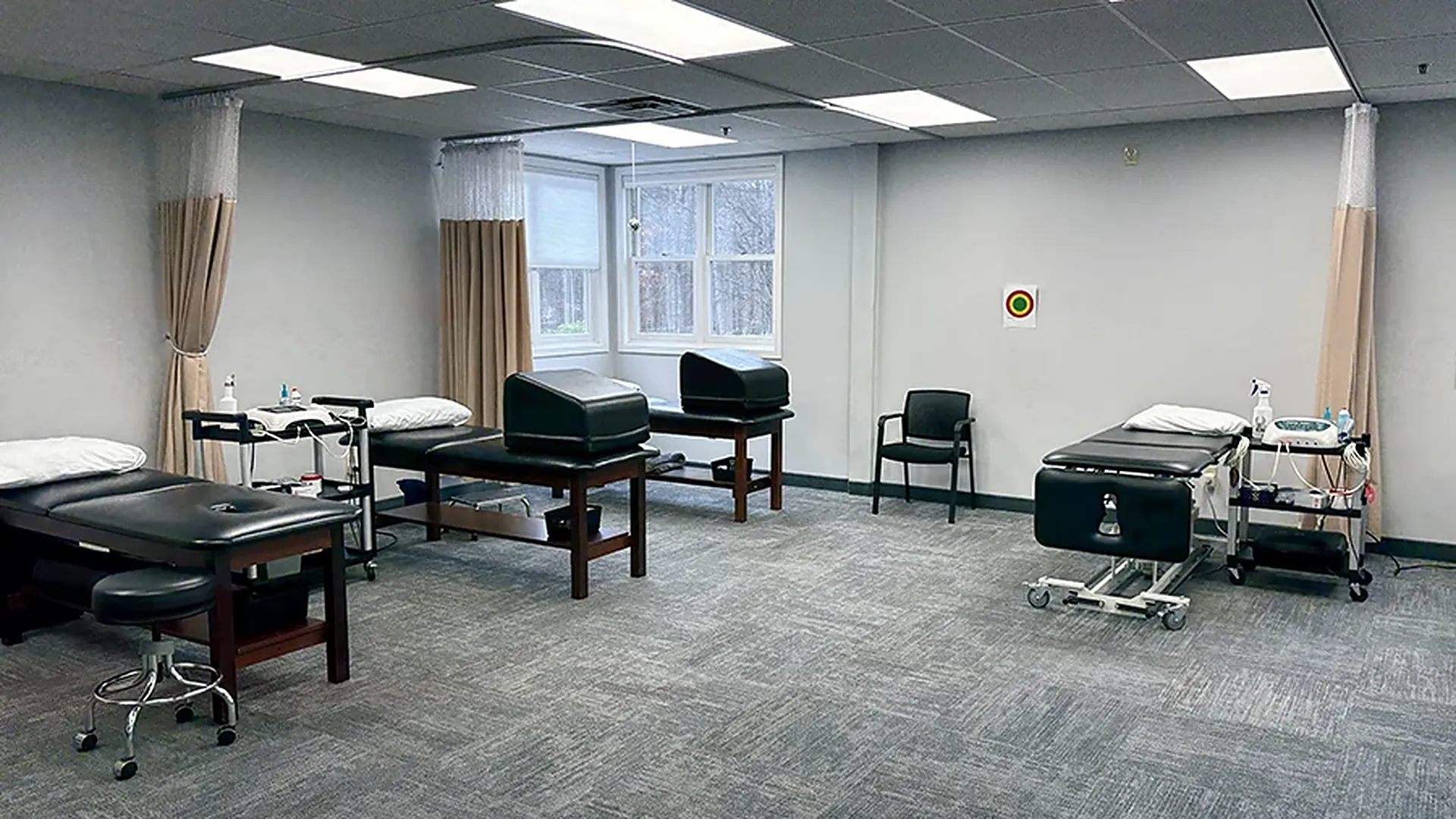
A joint built for stability, not motion.
The sacroiliac joints sit on either side of your tailbone and transfer every step you take from your leg into your spine. They are designed to move very little and to be held steady by the muscles around them. Trouble starts at either extreme: the joint stiffens and stops sharing load, or the ligaments loosen and it moves more than it should. Both produce the same deep, one-sided ache, which is exactly why SI pain gets mislabelled as a disc or a strain.
Telling those two apart is the whole job. Your therapist tests each side, compares how the pelvis moves when you load one leg, and checks the hip and trunk muscles that are supposed to lock it down. Then you find out which version you have, because a stiff SI joint and an unstable one need opposite treatment. Getting that backwards is the most common reason people go months without progress.
SI joint pain has a pattern of its own.
It rarely behaves like disc pain. What sets it off, and where you can point to it, is usually the giveaway.
One-Sided Pain Below the Belt Line
A deep ache you can cover with one finger, just inside the back of the hip bone, almost always on the same side.
Pain Rolling Over in Bed
Turning over wakes you up, and getting out of bed means bracing and swinging both legs across together.
Standing Up from Sitting
The first few steps out of a car or a low chair are the worst of the day, then it loosens as you keep walking.
Single-Leg Loading Feels Unsafe
Stairs, stepping into the shower, or pulling on trousers on one leg, anything that puts your weight through one side.
Buttock and Groin Ache
Pain that spreads into the buttock, the back of the thigh, or the groin without the burning or numbness of a nerve.
A Sense of Slipping or Catching
A feeling that something shifts or gives in the pelvis with certain movements, common where the joint has become too mobile.
Find out which side is moving wrong, then hold it.
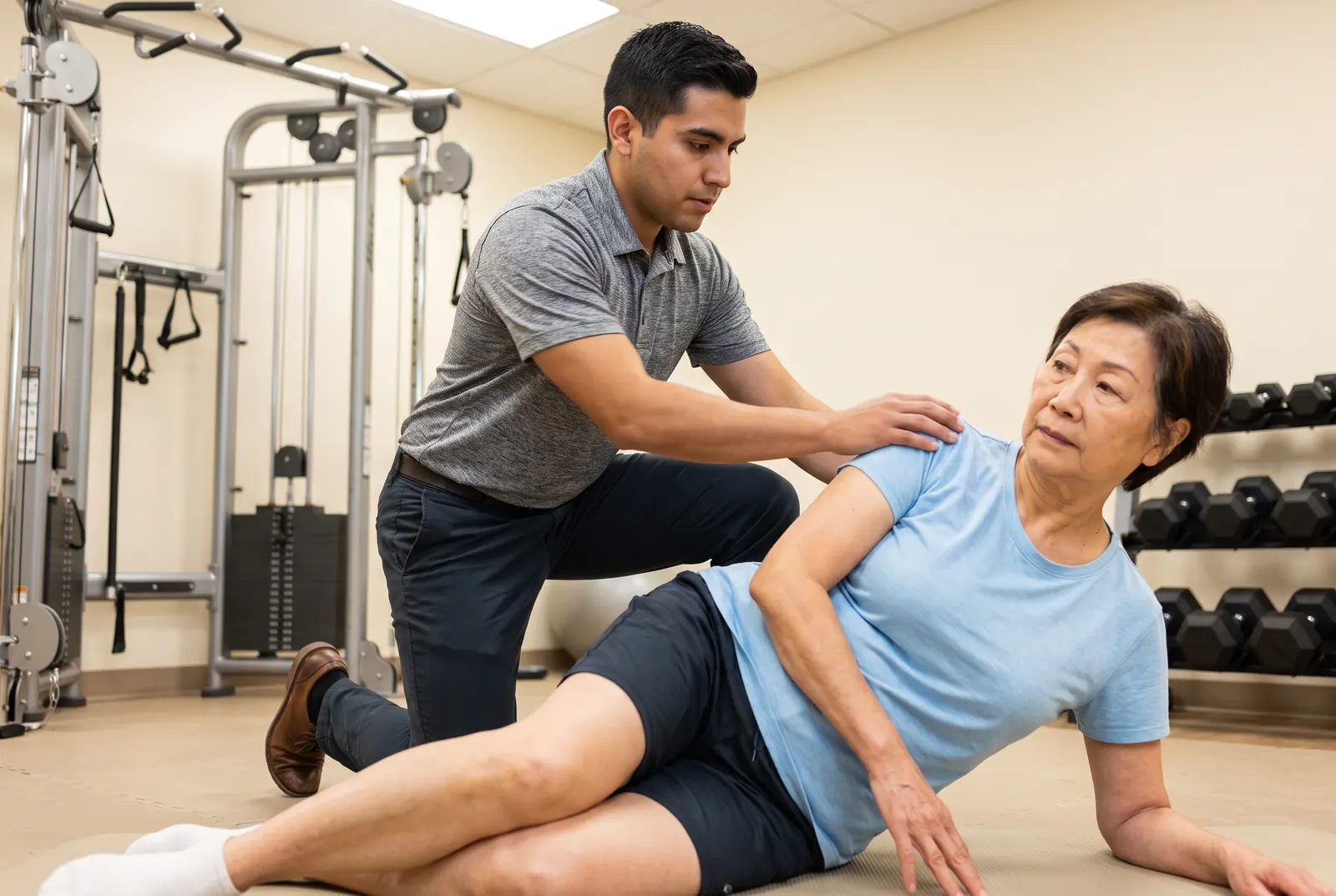
If the joint is stiff, we mobilize or manipulate it and free up the hip and lumbar segments that were making it work alone. If it is moving too much, we do the opposite: we leave it alone and build the glute, adductor, and deep trunk control that clamps the pelvis together, sometimes with a temporary belt while that strength arrives.
Either way, hands-on work only buys the window. The strength is what keeps it. SI pain shows up in several groups: runners and lifters, people whose work involves repeated one-sided loading, and adults with an old pelvic injury.
No referral needed. Most insurances accepted. Doors open at 5:00 AM, so you can be seen before work.
What our patients say.
"Carroll Physical Therapy has helped me many times over the years. The therapists are professional, kind and caring. I have always had good results with their treatments."Laura G. · Google Review
Schedule Your Appointment
No referral needed. Most insurances accepted. Doors open at 5:00 AM.
Your first visit is a full one-on-one evaluation: come in, tell us everything, and leave with a plan.
* Required field
You’re all set.
We’ll reach out within one business day to confirm your appointment. If you need to speak with us sooner, call us directly.