

The chain runs from your foot to your pelvis.
Your hip and knee carry your body weight every step of the day, which means small errors in how load arrives get repeated thousands of times. Weak hip abductors let the pelvis drop and load the outside of the knee. A stiff ankle forces the knee inward on every squat and stair. Tight hip flexors tip the pelvis forward and hand the extra work to the low back.
Small leg length differences as little as 1 cm also substantially change how these joints get loaded, and almost nobody has been measured. So the assessment looks at the whole leg and how you walk on it, not only the joint you pointed at. Then you get told, plainly, which part of the chain is short on motion and which part is short on strength.
Where your pain occurs tells us what is involved.
Knee and hip pain have characteristic patterns that point to specific structures, each with its own treatment strategy.
Knee Pain on Stairs
Pain at the front of the knee going down stairs or after prolonged sitting, classic for patellofemoral syndrome.
Lateral Knee Pain
Pain on the outside of the knee with running or prolonged walking, typically IT band syndrome or lateral compartment issues.
Morning Hip Stiffness
Hip joint stiffness first thing in the morning that loosens after fifteen or twenty minutes of moving around.
Groin Ache
Deep aching in the groin with hip rotation or end-range flexion, often labral or arthritic in nature.
Giving Way
A sensation of the knee suddenly giving way, associated with ligament laxity, meniscal involvement, or quad inhibition.
Pain with Squatting
Pain with deep knee bend, getting in and out of a car, or rising from a low chair or toilet seat.
Change how load arrives, and the joint stops complaining.
Lower body rehab here starts with watching you walk, squat, and step down, because that is where the fault shows up. We separate the impairments out: hip weakness, ankle stiffness, a pelvis that drops, a leg that is fractionally shorter. Each one gets its own answer instead of a general strengthening program.
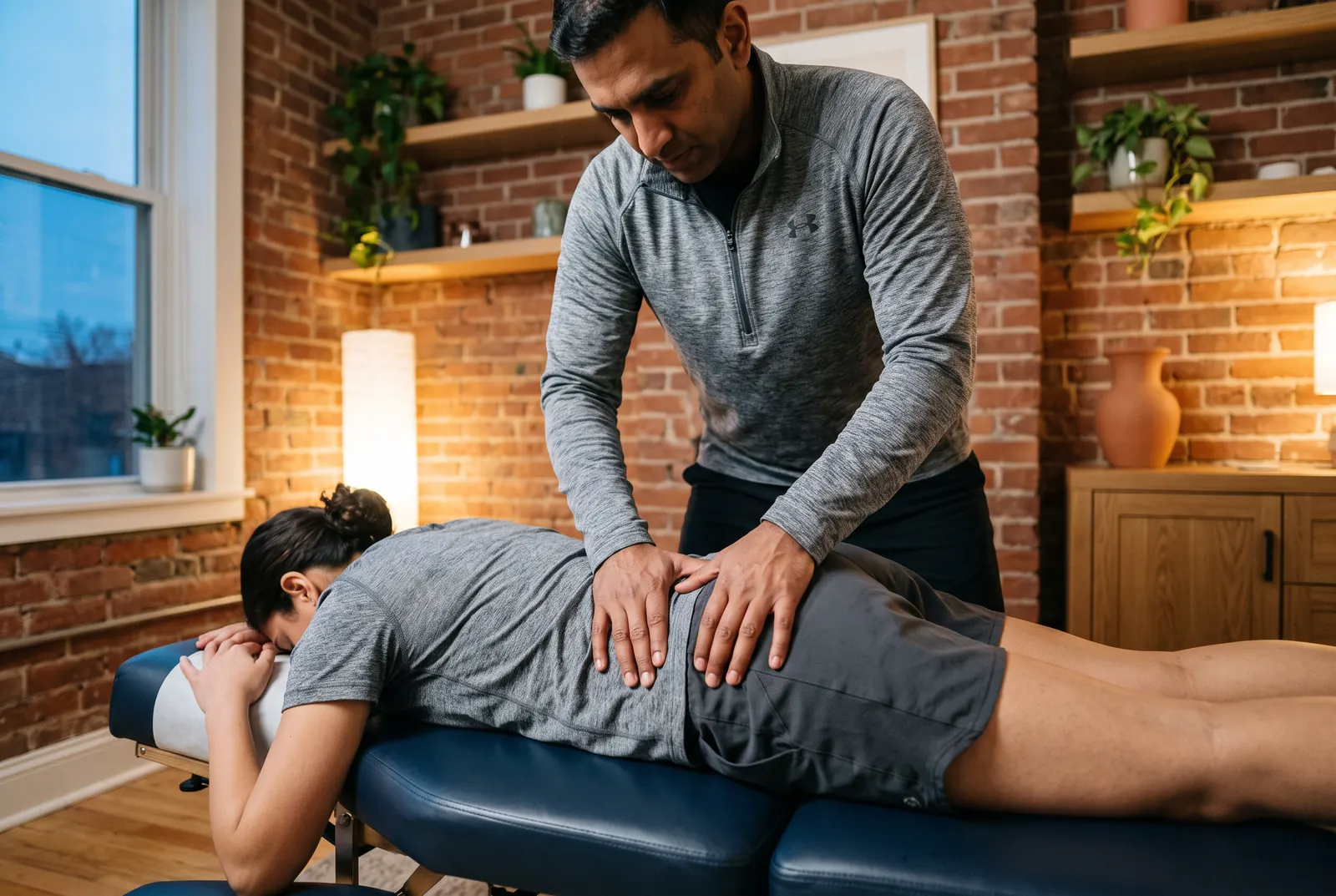
Manual therapy restores motion at the hip, knee, or ankle where it is missing. Then we load the joint on purpose, in the range it tolerates, so the muscle around it carries work the cartilage has been absorbing. When pain limits how much load you can take, blood flow restriction lets us build strength at much lighter weights.
No referral needed. Most insurances accepted. Doors open at 5:00 AM, so you can be seen before work.
What our patients say.
"I visited Carroll Physical Therapy during my rehabilitation from right hip replacement. My treatment was personalized to my own situation. I was able to walk unassisted two weeks after my surgery."Douglas H. · Google Review
Schedule Your Appointment
No referral needed. Most insurances accepted. Doors open at 5:00 AM.
Your first visit is a full one-on-one evaluation: come in, tell us everything, and leave with a plan.
* Required field
You’re all set.
We’ll reach out within one business day to confirm your appointment. If you need to speak with us sooner, call us directly.