
Osteoarthritis and rheumatoid arthritis are not the same problem.
Osteoarthritis is mechanical. Cartilage wears where a joint has been loaded unevenly for years, and that joint becomes stiff, achy, and worse after activity or after sitting still. It usually settles into one or two places: a knee, a hip, the base of a thumb, the lower back.
Rheumatoid arthritis is inflammatory and systemic. It tends to hit the same joints on both sides, often the small joints of the hands and wrists, with swelling and morning stiffness that lingers. Your physician manages the disease itself. Physical therapy manages what it has taken from your motion and strength, and the two run alongside each other.
The joint tells you which kind you have.
Where it hurts, when it hurts, and how long the stiffness lasts are the details that separate wear and tear from inflammation. That distinction changes the plan.
Morning Stiffness
Joints that feel locked for the first half hour of the day, or after sitting still, then loosen once you start moving.
Pain That Follows Activity
Aching in a knee, hip, or thumb hours after a long walk, a day in the yard, or a shift on your feet.
Swollen Hands and Wrists
Puffiness and tenderness across the small joints of both hands, a pattern more typical of rheumatoid arthritis.
A Grip That Has Quietly Failed
Jars, keys, a coffee cup, a steering wheel held for a full drive. Grip strength goes before anyone thinks to test it.
Grinding or Catching
A gritty, catching feeling as the joint moves through its range, common at the knee and the base of the thumb.
Range You Stopped Using
Kneeling, reaching a high shelf, or straightening a finger fully becomes something you no longer attempt rather than something you cannot do.
Move the joint that is stiff. Strengthen what protects it.
Arthritis pain is rarely coming from the cartilage alone. Guarding, lost range, and the weakness that follows months of avoiding a joint account for a large share of what you feel day to day, and all three respond to treatment. Hands-on joint mobilization and soft tissue work give back the motion you still have available, which is usually more than you expect.
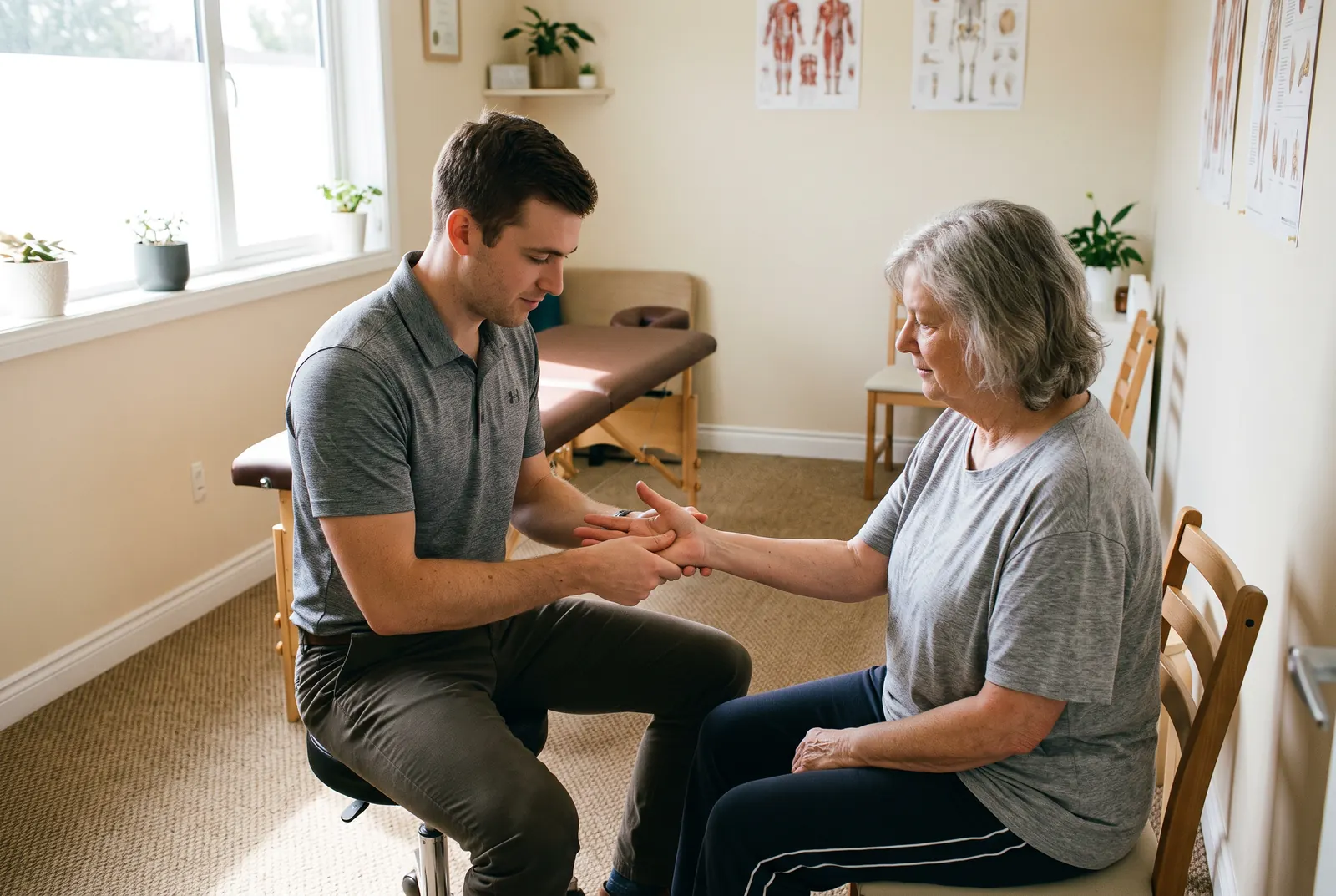
Then we load the joint on purpose, in the range it tolerates, so the muscles around it carry work again. For hand and small-joint arthritis the same logic applies at a smaller scale: mobilizing stiff thumb and finger joints, tendon glide work, grip and pinch strengthening, splinting advice, and changing how you hold the tools and objects you use all day. That is what a physical therapist can do for a painful hand that rest alone cannot.
No referral needed. Most insurances accepted. Doors open at 5:00 AM, so you can be seen before work.
What our patients say.
"Carroll Physical Therapy has helped me many times over the years. The therapists are professional, kind and caring. I have always had good results with their treatments."Laura G. · Google Review
Schedule Your Appointment
No referral needed. Most insurances accepted. Doors open at 5:00 AM.
Your first visit is a full one-on-one evaluation: come in, tell us everything, and leave with a plan.
* Required field
You’re all set.
We’ll reach out within one business day to confirm your appointment. If you need to speak with us sooner, call us directly.