
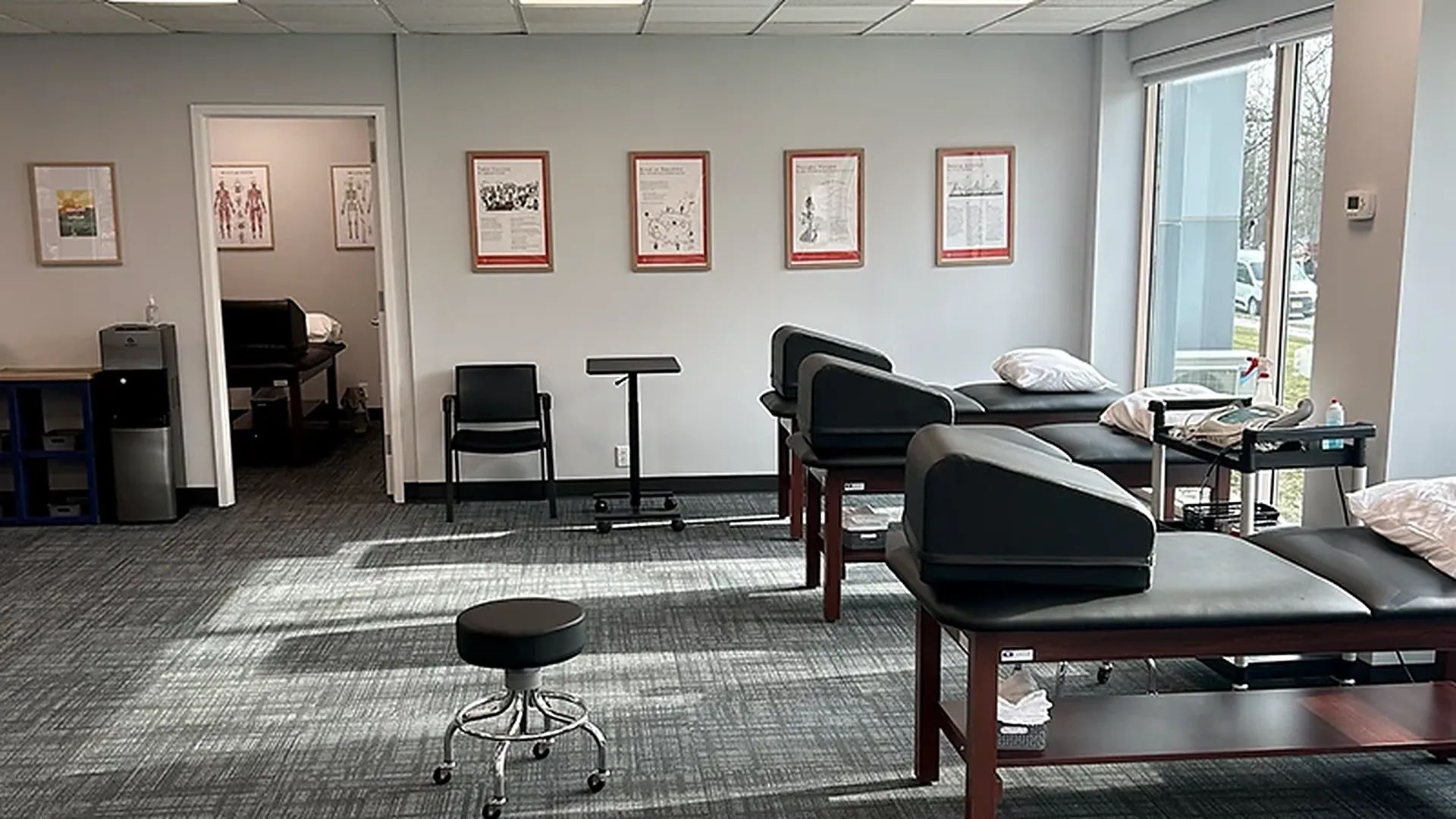
What you call tension usually has a mechanical address.
The cervical spine is built for range, and it pays for that range in stability. Hours at a screen, a mid-back that has stopped rotating, and nights in an awkward position gradually change how the seven neck segments share the work. One or two of them stop moving. The rest, and the muscles around them, take the extra load.
So "tension" is rarely the problem itself. It is what you feel when a stiff segment is being guarded by muscles working overtime to protect it. That distinction matters, because stiffness, guarding, and weakness are three different things with three different treatments. Your physical therapist will tell you which ones you have, in plain language, before anything is treated.
Neck pain rarely stays in one place.
The cervical spine houses nerves that travel into the arms and head. Restrictions at any level can produce symptoms well beyond the neck itself.
Cervical Stiffness
Difficulty rotating to check blind spots, look over your shoulder, or tilt your head fully side to side.
Tech Neck Pain
Aching or sharp pain at the base of the skull or upper trapezius after prolonged screen use.
Cervicogenic Headaches
Headaches that originate in the cervical spine, typically one-sided, worsened by neck movement.
Arm Tingling or Numbness
Pins-and-needles or numbness traveling into the arm, forearm, or fingers from nerve root irritation.
Upper Trapezius Tightness
Persistent tightness and tenderness at the top of the shoulder that massage temporarily relieves but cannot resolve.
Postural Pain
Pain that worsens with forward head posture and improves temporarily when you consciously "sit up straight."
Move what is stiff. Strengthen what is weak.
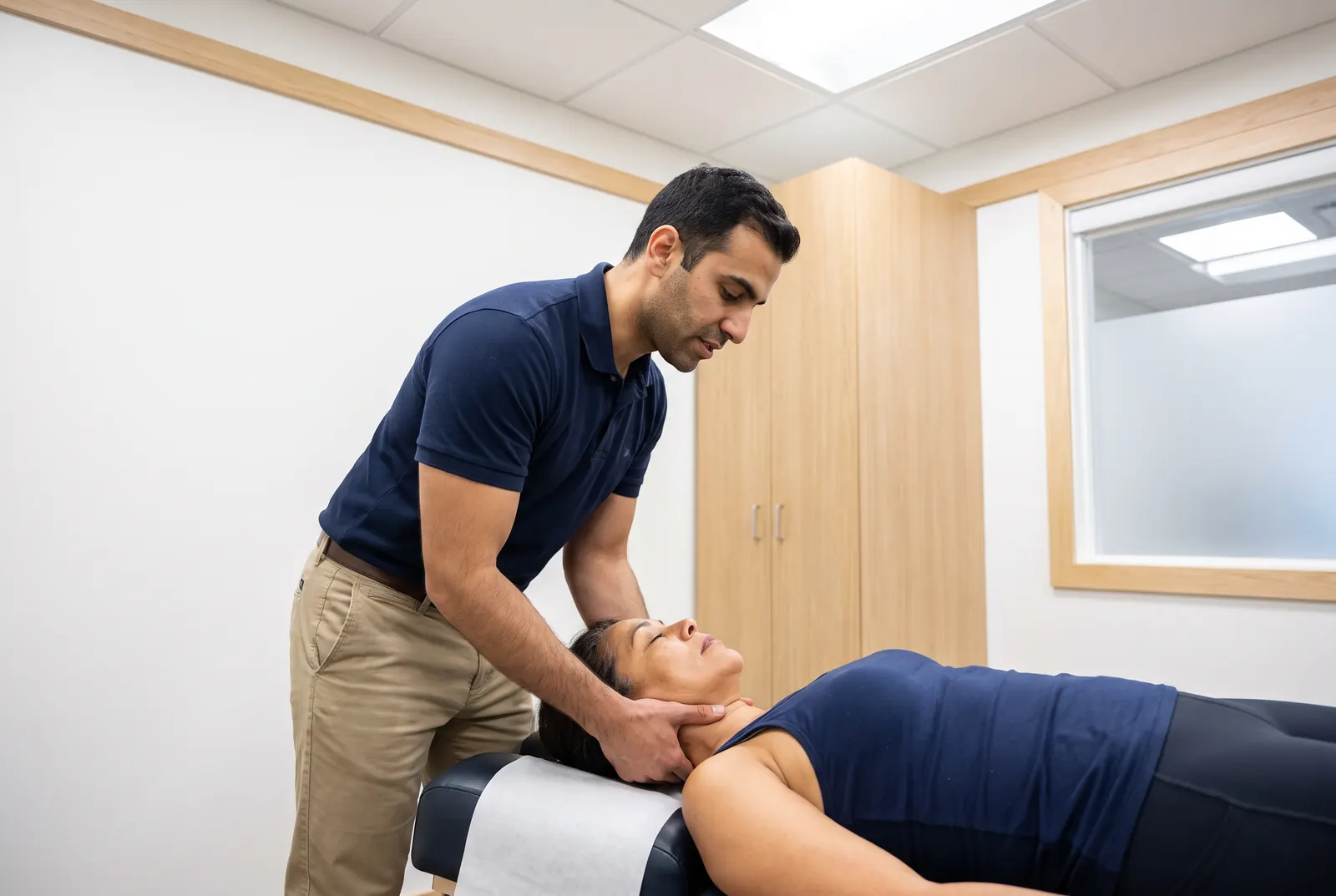
That is the whole method, and it is the owner's own description of how physical therapy should work. Hands-on joint mobilization gives back the rotation and side-bending a guarded segment has been holding onto. You usually feel that change in the room, which is useful: it tells both of us that we found the right level.
Then we treat the two things that let it happen. The thoracic spine, because a mid-back that will not rotate forces the neck to rotate for it. And the deep cervical flexors, the small muscles that hold your head over your shoulders when you stop thinking about posture. You leave with a program short enough to actually do and an explanation clear enough to repeat to someone else.
No referral needed. Most insurances accepted. Doors open at 5:00 AM, so you can be seen before work.
What our patients say.
"For over a year I had pain and very little mobility in my neck which made it difficult to drive. I went to Carroll Physical Therapy in Denville and worked with Dan Streeter."Barbara P. · Google Review
Schedule Your Appointment
No referral needed. Most insurances accepted. Doors open at 5:00 AM.
Your first visit is a full one-on-one evaluation: come in, tell us everything, and leave with a plan.
* Required field
You’re all set.
We’ll reach out within one business day to confirm your appointment. If you need to speak with us sooner, call us directly.