
The curve is not the whole story.
Most people are told the number, the degrees of curvature, and then told to watch it. What nobody explains is why one side of your back is always tired, why sitting through a movie hurts more than a walk, and why your posture feels like something you are constantly correcting. A curved spine loads unevenly. One set of muscles works overtime, the other quietly stops helping, and the segments in between stiffen up.
That uneven loading is the part we can change. We look at where your spine has motion and where it has none, which side is doing the work, and how your hips and ribs are compensating. Then we tell you, in plain language, which of your symptoms come from the curve itself and which come from what your body has been doing to cope with it. The second group is usually the bigger group.
One thing to be clear about: we treat scoliosis patients 18 years old and up. If you are looking for care for a child or a teenager, we are not the right fit, and we would rather say that now than after you have made the drive. For adults, whether your curve was found at 14 or at 54, physical therapy is about comfort, motion, and strength you can keep.
If any of this sounds like your day, you are in the right place.
Adults with scoliosis rarely come in talking about degrees of curvature. They come in talking about these.
The Constant Backache
A dull ache across the low back or between the shoulder blades that is worse at the end of the day and worse still after standing in one place.
One Side Does All the Work
The muscles along one side of your spine feel tight, ropey, and permanently fatigued, while the other side feels like it barely switches on.
Morning Stiffness Through the Trunk
Getting out of bed takes a few minutes of unwinding before your back will turn or bend the way you want it to.
Uneven Shoulders and Hips
One shoulder sits higher, a hip looks more prominent, hems hang crooked, and you are aware of it in every photograph.
Limited Rotation
Backing the car out of a driveway, reaching behind you, or looking over one shoulder is noticeably harder on one side than the other.
Leg Symptoms with Walking
Heaviness, aching, or pins and needles down a leg that eases when you sit or lean forward, common where a curve has become degenerative.
Move what is stiff. Strengthen what quit.
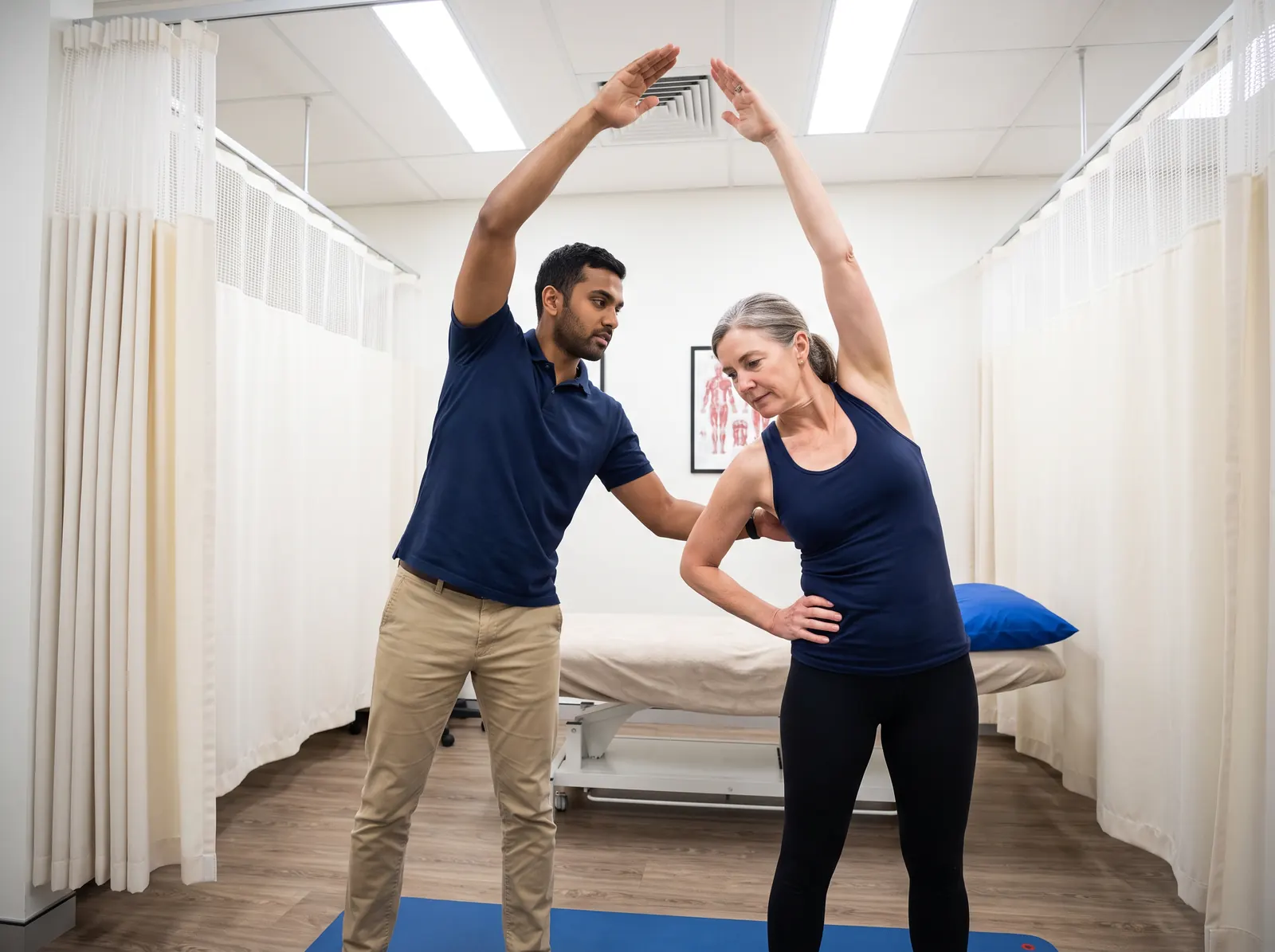
We are not trying to straighten your spine, and we will not pretend otherwise. We are changing how it loads. Hands-on work opens the segments and the ribs that have stopped moving, because a stiff spine has no way to share the work. Then we teach the side that went quiet to hold its share again, through rotation, breathing, and trunk control you practise in positions you actually spend your day in.
Your visits are one-on-one with a licensed physical therapist, so the plan changes as your body does. You will know what each exercise is for and what to do on the days your back flares, which for most patients matters more than anything that happens in the clinic.
Adults 18 and up. No referral needed. Most insurances accepted. Doors open at 5:00 AM, so you can be seen before work.
What our patients say.
"I have been attending physical therapy at Carroll Physical Therapy and have had an excellent experience. I initially worked with Luke, who was outstanding."Marjorie H. · Google Review
Schedule Your Appointment
Adults 18 and up. No referral needed. Most insurances accepted. Doors open at 5:00 AM.
Your first visit is a full one-on-one evaluation: come in, tell us everything, and leave with a plan.
* Required field
You’re all set.
We’ll reach out within one business day to confirm your appointment. If you need to speak with us sooner, call us directly.