
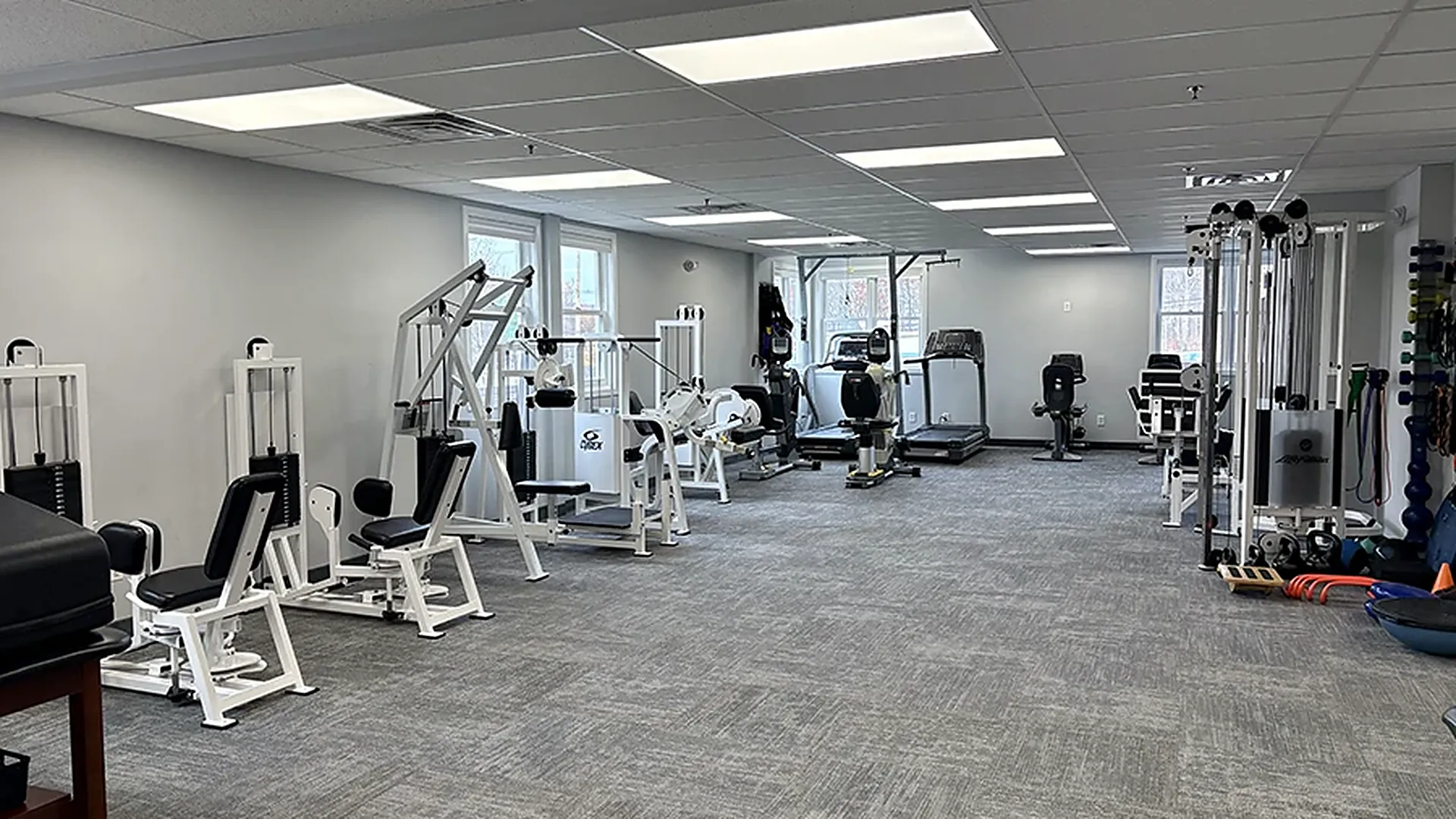
Two causes, and which one it is changes everything.
The first is repetitive impact. Running, walking on pavement, standing on concrete through a shift, a season of a new sport. Nothing dramatic happened. The tissue simply absorbed more mileage than it had been built up for, and it started complaining.
The second is abnormal mechanics: a stiff ankle, an arch that collapses or refuses to give, a weak hip that lets the knee drift inward. The foot then loads through a spot that was never meant to take it, and it does that on every step. The two causes overlap constantly, so we watch you walk, test the ankle and foot joint by joint, and check calf and hip strength before we say which one is doing the damage. If it is mechanics, rest will never fix it, and that is usually why the pain kept coming back.
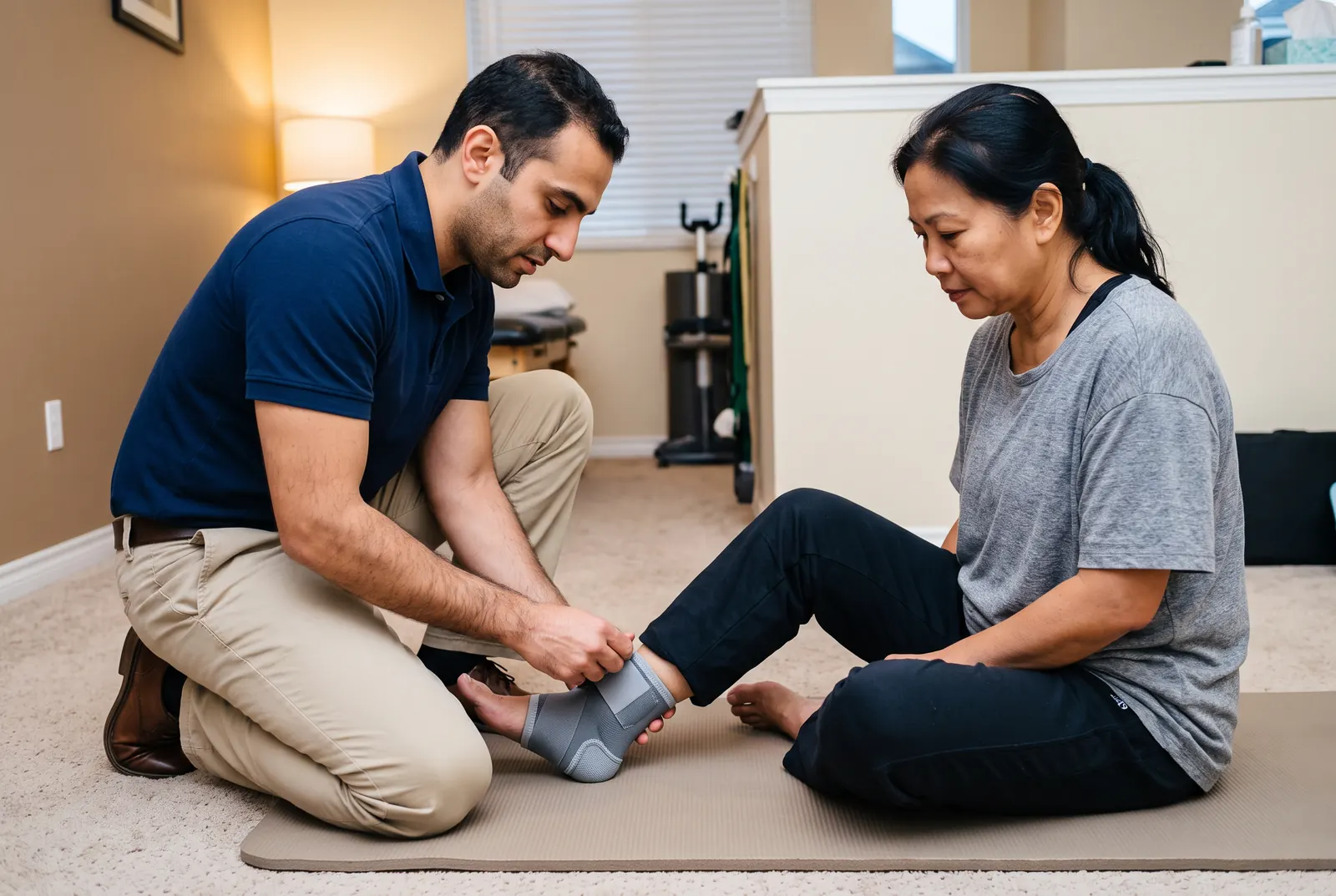
Where it hurts, and when, narrows it fast.
The foot and ankle have a lot of small structures packed together. The location of your pain and the time of day it is worst tell us which one is involved before we lay a hand on it.
Sharp on the First Steps
Heel or arch pain when you get out of bed or stand up after sitting, easing after you have walked a bit.
Worse the Longer You Are Up
Fine in the morning, aching by the end of a shift. A load tolerance problem more than a tissue damage problem.
An Ankle You Do Not Trust
It rolls on curbs, gravel, or uneven ground, often long after the original sprain healed.
Swelling Around the Ankle
Puffiness that comes up with activity and settles overnight, sometimes with a stiff, blocked feeling at end range.
Pain in One Exact Spot
The ball of the foot, the outside edge, or the back of the heel. A pinpoint location usually means a specific structure is overloaded.
A Changed Walk
You shorten your stride, turn the foot out, or limp without meaning to. That pattern then loads the knee and hip differently.
Treat the step, not just the sore spot.
The exam starts with how you walk and stand, then works down through the ankle, the arch, and the toes, and back up to the calf and hip. Your physical therapist tells you which joint is stiff, which muscle is not holding, and how that combination lands on the tissue that hurts.
Manual therapy and IASTM restore the ankle and foot motion the exam flagged. Calf, foot, and hip strengthening changes where the load goes on each step. Footwear and mileage get discussed honestly, because the way you load the foot between visits matters as much as what happens in the clinic.
No referral needed. Most insurances accepted. Doors open at 5:00 AM, so you can be seen before work.
What our patients say.
"Recently, I had reconstructive foot surgery to correct a severe bunion and several hammer toes."Ann C. · Post-surgical foot recovery
Schedule Your Appointment
No referral needed. Most insurances accepted. Doors open at 5:00 AM.
Your first visit is a full one-on-one evaluation: come in, tell us everything, and leave with a plan.
* Required field
You’re all set.
We’ll reach out within one business day to confirm your appointment. If you need to speak with us sooner, call us directly.